Cart 0

Cool bag for medicine = automatically safe for medicine?

Many cooling bags or cooling cases are advertised as if they were suitable for medicines — and even as if they were safe for temperature-sensitive medicines or insulin. Claims are made as though they would cool within the 2–8 °C (36-46 °F) range and would be safe within that range. Sometimes, a test report is even shown that is supposed to prove this safety.

Here, we show you what to look out for in order to check whether the test report presents a misleading picture rather than the actual facts.


How manufacturers can make their cooling bags appear safe in tests — even though they may actually put medicines at risk:

Not every test report shows how the bag performs under realistic everyday conditions

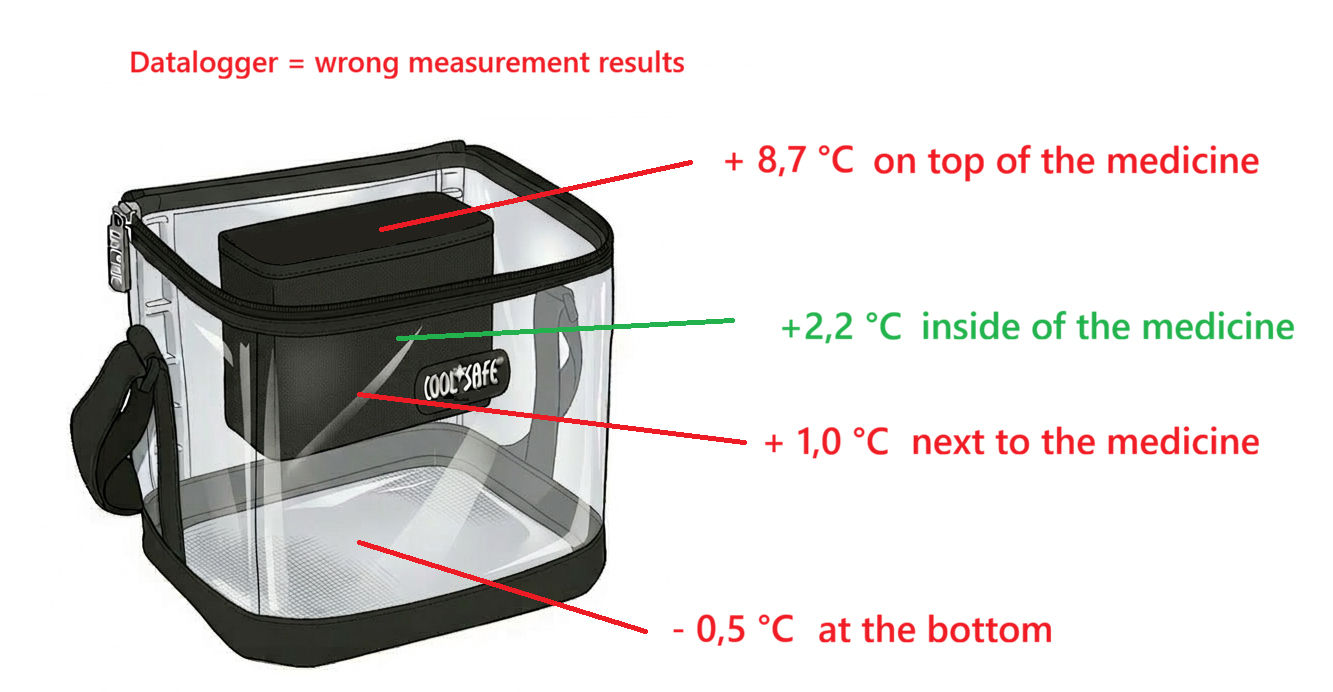
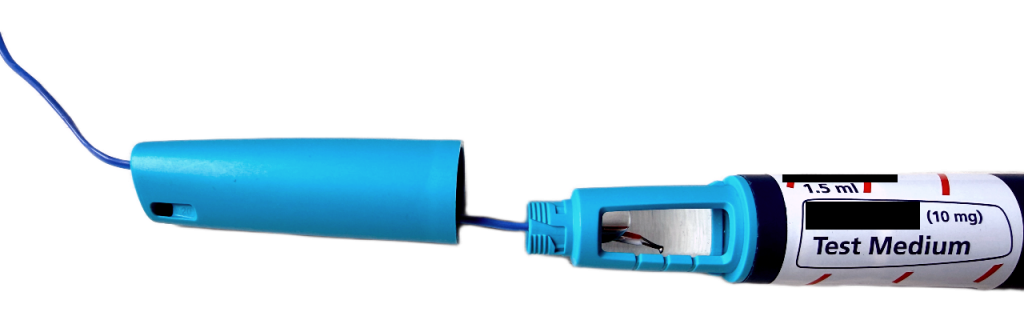
What matters is not only whether measurements were taken, but how they were taken

Temperatures that can harm medicines are not displayed in the report

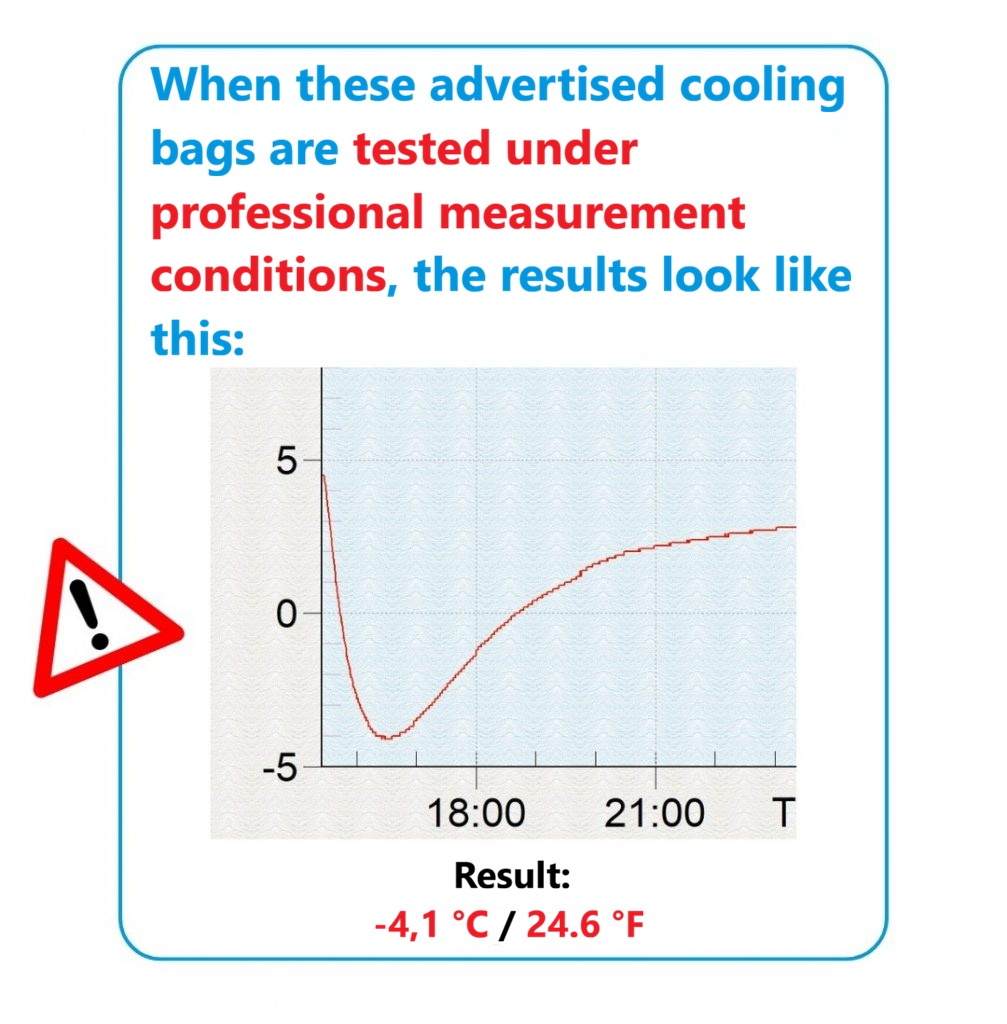
Test results of falsely advertised cool bags under professional measurement conditions

What manufacturers can influence in a test report

These 5 testing methods can make a result look better than it actually is:

Why this is misleading

If measurements are taken only every 1 or 10 minutes, critical drops in temperature can remain hidden between the measurement points. If the medicine falls below +2 °C exactly during this time, that moment does not appear in the report.

The measurement curve appears to show a safe cooling bag, even though the very dangerous phase in which the medicine became too cold is not visible in the report.

Explanation:

During the test period, the testing device collects data. It measures at a predefined interval or frequency. If measurements are recorded only every 1 or every 10 minutes, this can create gaps in the collection of critical data.

If the manufacturer knows that the temperature would fall below 2 °C (36 °F) at a certain point in time, they can set the data collection interval in such a way that exactly this moment is left out. As a result, the testing device does not record the period during which the temperature of the medicine is below 2 °C (36 °F).

Because no data is recorded between these intervals, it creates the impression that the temperature remains above 2 °C (36 °F). The bag appears to be safe, even though the medicine may be damaged during this time.

Why this is misleading

If the manufacturer knows that the temperature of the medicine will fall below 2 °C (36 °F), they only have to start the measurements with warmer cooling packs so that the medicine does not become too cold after all. If the test does not start with cooling packs fully frozen at −18 °C (approx. 0 °F), but instead at around −15 °C or −13 °C (5 °F or 8.6 °F), the result appears more favourable, even though the cooling bag is not safe.

A difference of just a few degrees can be enough to prevent the report from showing how quickly the medicine would fall below +2 °C (36 °F) under real-life conditions, with cooling packs starting at −18 °C/0 °F.

On paper, the results look good. But in everyday use, the medicine may be damaged.


The safe COOL*SAFE standard

COOL*SAFE tests with cooling packs frozen to −18 °C/0 °F, because this corresponds to the usual standard setting of freezers.

Why this is misleading

Another way for manufacturers to create test conditions that keep the temperature above +2 °C (36 °F) is to run the test with a medicine that has a higher temperature than +5 °C (41 °F).

Explanation:

If a test is started with a medicine at, for example, +8 °C/46 °F instead of a realistic +5 °C/41 °F (= refrigerator temperature), the temperature curve already has several “extra” degrees of advantage. As a result, the curve in the report can remain above +2 °C/36 °F, even though the bag would perform more critically under real-life conditions.

A starting temperature that is too warm can simulate safety that does not exist in everyday use.

The safe COOL*SAFE standard

COOL*SAFE tests with realistic starting temperatures of +5 °C (+/− 1 °C) = +41 °F  as they are typically set in refrigerators.

Why this is misleading

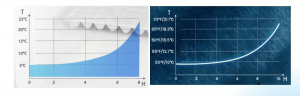
Most visual representations simply hide the critical initial phase. The measurement curve then only starts at the point where it runs above +2 °C (36 °F) — or the graphic is entirely idealized and manually created, without being based on actual measurement results. To the viewer, it looks safe, even though the decisive critical range had already been crossed before.

What is not shown appears as if it never happened.

Typical examples:

Test reports and test curves for medicine cooling bags often do not reflect reality.

Testberichte und Testkurven von Kühltaschen für Medikamente stellen oft nicht die Realität dar

The safe COOL*SAFE standard

COOL*SAFE shows the complete and real temperature curve. Read more about this HERE.

Why this is misleading

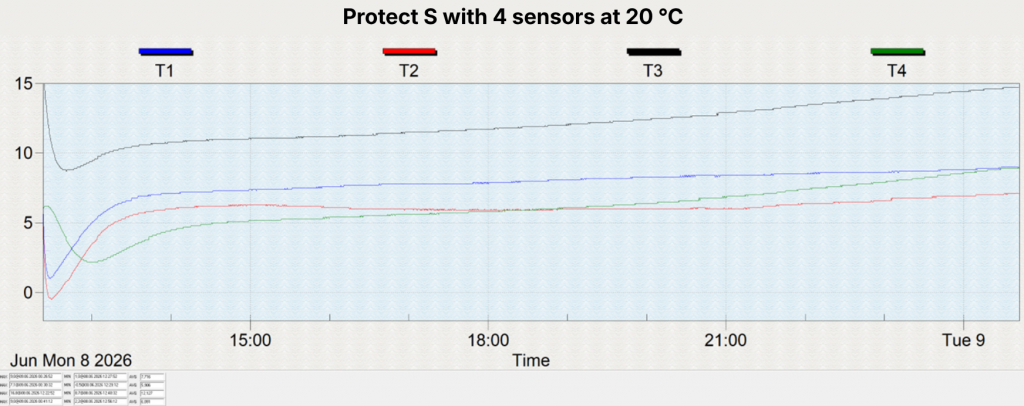
If testing is only carried out at an ambient temperature of +25 °C/77 °F, it says little about what happens at normal room temperature or on cooler days. Especially at lower outside temperatures, a medicine can fall below +2 °C/36 °F more quickly in some bags.

A warm test room can hide critical behaviour at real everyday temperatures. But your medicine needs protection even at ambient temperatures lower than +25 °C/77 °F.

The safe COOL*SAFE standard
COOL*SAFE tests cooling performance under realistic conditions, so that not only heat, but also the risk of cooling that is too cold becomes visible.

Why such methods are problematic in everyday use

What looks safe on paper can be risky in everyday life:

What works in a test report often does not work in real life. Many test conditions cannot realistically be reproduced in everyday use:

  • No one should set their freezer warmer than −18 °C/0 °F.
  • No one should keep their refrigerator permanently set to around +8 °C/46 °C.
  • No one uses a cooling bag only when the ambient temperature constantly remains above +25 °C/77 °F.

This is exactly why it is crucial to know whether a test reflects real everyday conditions — or merely produces a favourable result.

The self-check checklist: What to look for in a test report

You should check every test report against these 5 questions:

  1. How short or long was the measurement interval?
  2. At what temperature did the cooling packs start?
  3. At what starting temperature was the medicine tested?
  4. At what ambient temperature were the measurements taken?
  5. Does the curve really show the complete course — including the period before +2 °C/36 °F?

If even one of these points was chosen unrealistically, the result can look significantly better in the test report than the cooling bag actually performs in everyday use.

Checklist for you: What to look for when chosing a medicine cool bag, if it is safe

You have learned how cooling bags can appear safe in test reports — even though they may put medicines at risk

Not every test report reflects reality. Even small changes in the test setup can make a cooling bag appear safe, although the medicine may fall below +2 °C/36 °F.

Many manufacturers advertise with reassuring claims such as “keeps cool for 24 hours”, “protection against freezing”, “suitable for medicines” or “within the 2–8 °C / 36-46 °F range”. This sounds safe. But such claims are only truly meaningful if the test conditions are realistic and fully disclosed.

What matters is not whether testing was carried out — but how. Ask for evidence.

COOLSAFE premium quality medicine cool bags

COOL*SAFE: This is what verifiable safety looks like

On the COOL*SAFE product pages, you will find the relevant temperature curves and measurement results for each model — transparent, traceable, and tested under realistic conditions.